
The Scope of Marketplace Buyer Protection and Seller-Provided Warranties for Refunds, Exchanges, and Repairs

An online order arrives damaged in the mail, a package vanishes during international transit, or a newly purchased electronic device suddenly stops working three weeks after delivery. In that stressful moment of post-purchase friction, buyers face a critical decision fork: Do you file an official dispute ticket with the marketplace platform, send a direct email to the seller, or call your credit card company to demand a chargeback?
Selecting the wrong filing destination wastes valuable time and risks missing strict contractual deadlines. Major e-commerce platforms (such as Amazon, eBay, AliExpress, and Shopee) operate under a two-layer security framework: short-term marketplace buyer protections (which cover delivery and listing accuracy) and long-term seller warranties (which handle post-delivery hardware performance). Resolving post-purchase disputes successfully requires mapping your exact problem scenario directly to the correct claim filing destination and escalation tier.

The two-layer safety net: Platform protection versus seller warranty
Before submitting any documentation or initiating a dispute, you must identify which coverage layer is legally responsible for resolving your specific issue.
Marketplace Buyer Protection (Short-term)
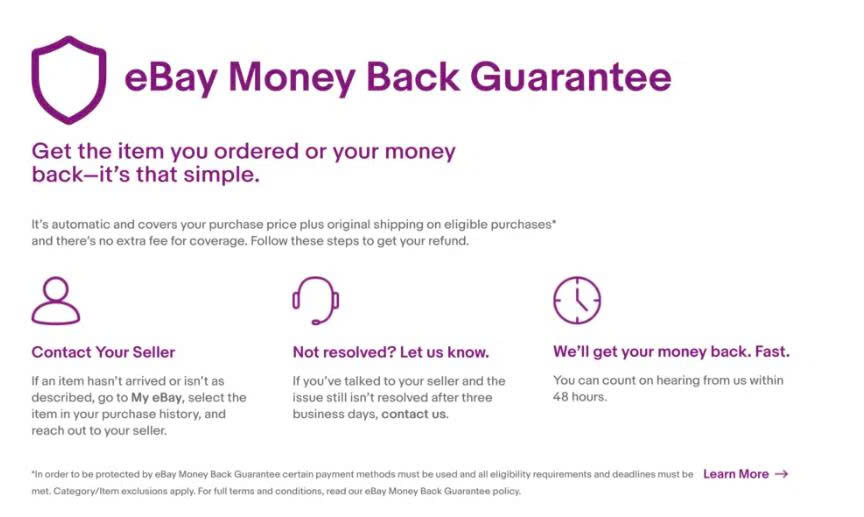
Platform-level buyer protection (such as the eBay Money Back Guarantee or Amazon A-to-z Guarantee) is a standardized policy enforced directly by the marketplace operator. This coverage handles logistical and arrival failures: Non-Delivery, Damaged on Arrival (DOA), or “Item Not as Described” (INAD).
The filing window for platform protection is strict and short, typically expiring 14 to 30 days after the estimated delivery date. Because the platform acts as an escrow mediator, the primary resolution under buyer protection is almost always a full or partial monetary refund, rather than a product repair.
Seller and Manufacturer Warranties (Long-term)
Seller-provided or manufacturer warranties cover functional product reliability over an extended timeframe (typically 6 to 24 months). If an item arrives in perfect physical condition and works as described for two months, but then suffers an internal battery or motherboard failure, marketplace buyer protection no longer applies.
At this stage, your claim falls under the seller’s warranty. The seller or manufacturer is responsible for repairing the item, sending replacement parts, or exchanging the defective unit.
Actionable claim decision guide by problem scenario
To eliminate confusion and ensure you file your claim with the correct entity before deadlines expire, use this scenario-based decision guide:
| Problem scenario | Primary filing destination | Required proof documents | Expected resolution outcome |
| Package lost or not delivered | Marketplace Dispute Center (e.g., eBay / Amazon) | Tracking receipt, order confirmation screenshot | Full Refund (3–7 Business Days) |
| Item damaged on arrival (DOA) | Marketplace Dispute Center | Photos/videos of damaged box & product | Full Refund or Free Replacement (5–10 Days) |
| Functional defect after 3 weeks | Seller / Manufacturer Support | Purchase invoice, video proof of technical defect | Repair or Replacement (14–30 Days) |
| Seller & Marketplace reject claim | Credit Card Issuer / PayPal | Chat logs proving denial of valid claim | Chargeback Refund (30–60 Days) |
The three-tier dispute escalation ladder
When a dispute arises, navigating the process effectively requires moving systematically through a three-tier escalation ladder rather than jumping straight to aggressive measures.
Direct merchant negotiation and written paper trails
Always initiate contact through the marketplace’s official internal messaging portal. State the problem clearly, attach photographic or video evidence, and specify your desired resolution (refund, replacement, or repair).
Communicating strictly within the platform’s messaging system creates an immutable, timestamped paper trail. Never agree to communicate via external email or WhatsApp, as marketplace mediators will ignore external chat logs during official reviews.
Official marketplace mediation and guarantee claims
If the seller fails to respond within 48 business hours, refuses to honor their stated return policy, or offers an unfairly low partial refund, escalate the case to the platform’s formal dispute resolution board.
Filing an official guarantee claim (such as an Amazon A-to-z claim) forces a platform representative to review the internal messaging logs and shipping tracking data. If the evidence shows the item arrived damaged or wasn’t delivered, the platform will override the seller and issue a refund directly from the seller’s escrowed funds.
Credit card chargeback requests as the ultimate safety net
If both the seller and the marketplace dispute board reject a legitimate claim – or if the platform’s protection window expired while you were attempting to negotiate with an uncooperative seller – you can deploy your ultimate financial safety net: a Credit Card Chargeback.
Contact your card issuer (Visa, Mastercard, or American Express) or PayPal and file a dispute under “Services/Goods Not Received” or “Defective Merchandise.” Providing your internal messaging logs proving that you attempted to resolve the issue in good faith will prompt your credit card company to reverse the transaction and claw back the funds directly from the merchant’s acquiring bank.

Hidden return shipping liabilities in cross-border disputes
Before requesting an exchange or sending an item back for repair, scrutinize the return shipping fine print, especially in international cross-border transactions.
Under standard marketplace consumer protection rules, if an item arrives damaged or incorrect, the seller is legally responsible for providing a prepaid return shipping label. Never pay out-of-pocket for return shipping on a defective item unless the seller explicitly agrees in writing within the official chat log to reimburse those freight costs.
However, if you are requesting a return under a long-term seller warranty after 60 days, the fine print often shifts the international return freight burden onto the buyer. Shipping a heavy electronic device or home appliance back to an overseas warehouse can cost more than the item’s current value. Furthermore, original customs import tariffs and local Value-Added Tax (VAT) paid upon arrival are non-refundable by the merchant, making a full hardware replacement or local repair arrangement far more economical than an international return.